
Check out all the must-see places and things to do & see
-


Vietnam
-


Thailand
-
Cambodia
-


Myanmar
-


Laos
The combination of fun and educational activities
-
Vietnam
-
Thailand
-
Cambodia
-
Myanmar
-
Laos
Unique experience combined with top-notch services
-
Vietnam
-
Thailand
-
Cambodia
-
Myanmar
-
Laos
Easy excursions combined with unique experience making the long-lasting romantic memories
-
Vietnam
-
Thailand
-
Cambodia
-
Myanmar
-
Laos
Reveal off-the-beatentrack routes, least explored destinations, and unknown tribe groups
-
Vietnam
-
Thailand
-
Cambodia
-
Myanmar
-
Laos
Explore the least visited destinations and unknown experience on foot
-
Vietnam
-
Thailand
-
Cambodia
-
Myanmar
-
Laos
Explore every corners of the destination on two wheels
-
Vietnam
-
Thailand
-
Cambodia
-
Myanmar
-
Laos
Easy excursion combined with week-long beach break
-
Vietnam
-
Thailand
-
Cambodia
-
Myanmar
-
Laos
The combination of some must-see experience and the cruise tour along the mighty rivers
-
Vietnam
-
Thailand
-
Cambodia
-
Myanmar
-
Laos
-
Vietnam
-
Thailand
-
Cambodia
-
Myanmar
-
Laos
-
Vietnam
-
Thailand
-
Cambodia
-
Myanmar
-
Laos
-
Vietnam
-
Thailand
-
Cambodia
-
Myanmar
-
Laos
-
Vietnam
-
Thailand
-
Cambodia
-
Myanmar
-
Laos

Cambodia Cultural insights
Aiming to share our passion of Laos, we gather here general infomation and anecdotes for you to better understand the country's cultural, people and story.
 Our blog latest article about Cambodia
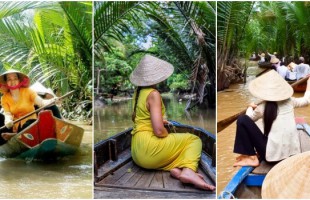 Cruising the Mekong River: A Journey of Scenic Beauty and Cultural Delights

Taking a cruise on the fascinating Mekong River offers a unique and memorable travel experience. The Mekong River, one of the longest rivers in Asia, flows through several countries, including China, Myanmar, Laos, Thailand, Cambodia, and Vietnam. Each destination along the river offers its own distinct cultural, historical, and natural attractions. In this article, we will go over what you can expect when cruising the Mekong River.

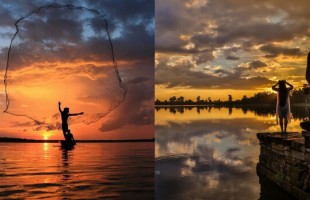
Cambodia street food
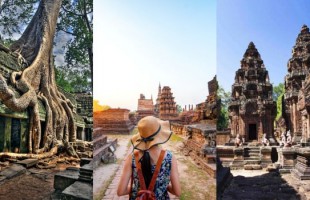
 How many days do you need and how to plan the best itinerary in Cambodia?
How long to spend in Cambodia may seem like a ridiculous question to address, but if you have plenty of time and aren’t sure how much to dedicate, this blog will definitely help you out.
How long can you stay in Cambodia?
Well, as long as you like! From 7 days to a month, there are various ways you can travel across Cambodia and uncover its secrets. Advising an ideal trip length for Cambodia is a bit of a complex challenge, as it depends on several factors such as the places you wish to visit, the activities you plan to join, or if you want to combine Cambodia with its neighbor countries.
Stay tuned! We are going to sort all these things out including the step-by-step guide to create the best itinerary in Cambodia.
 HASSLE-FREE ENTRY: Gov’t scraps PCR and rapid tests for international arrivals
After nearly two years of restricting international arrivals as part of Covid-19 prevention measures, Cambodia yesterday become the first country in Southeast Asia to drop the requirements for both pre-travel PCR (polymerase chain reaction) test and on-arrival rapid antigen test for fully vaccinated travellers into the Kingdom.
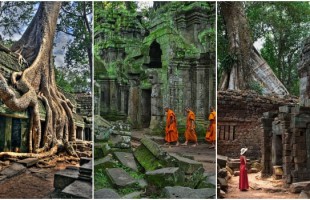 Cambodia abolished Covid tests & enable on-arrival visa system
Cambodia has abolished the need for a PCR negative test obtained 72 hours before arrival and rapid test upon arrival in Cambodia. They also enable to visa-on arrival system on the strike to facilitate the reopening process of the tourism sector as reported on March 17th, 2022.
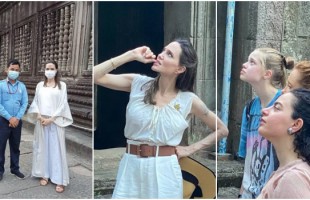 Angelina Jolie surprises fans by turning up at Angkor Wat
Hollywood actress Angelina Jolie, who is well known to Cambodians, has returned to the Kingdom for the first time since the outbreak of Covid-19 in 2020.
In the past, the American film star directed the film First They Killed My Father here after starring in Tomb Raider, released in 2001, which is considered the first international movie in modern times to introduce the wonder of Angkor Wat to a wider, western audience.
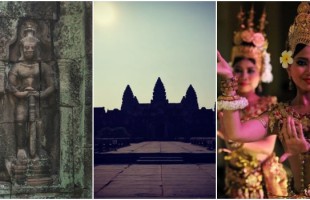 Visit the empty Angkor Wat? Now is the best time!
The below article is written by Reece Ferguson from Khmer Night about the experience with a visit to Siem Reap recently in the "new normal". Check it out to know what to expect if you are planning to visit Cambodia in the "new normal" in 2022.
********
Siem Reap has really gone through the wars lately, with lockdown’s and “Red Zones” seriously impacting the city. The lockdown is though now over, meaning this might well be your last chance to visit a truly empty Angkor Wat.
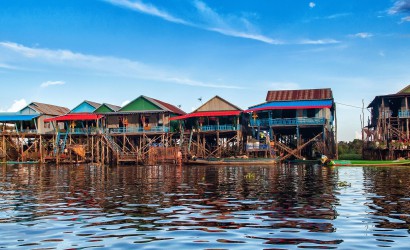
Every now and again you get a job-perk, so when Khmer Nights were invited to test out a new tourism app in Siem Reap, we jumped at the chance. Visiting the floating village on Tonle Sap and Angkor Wat were duly picked as our personal tour choices and we got ready to embark on a mini-adventure.
When the crisis is over, you need this guide to visit Angkor Wat without the crowds
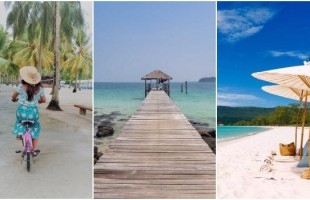 Complete guide to Sihanoukville Sandbox
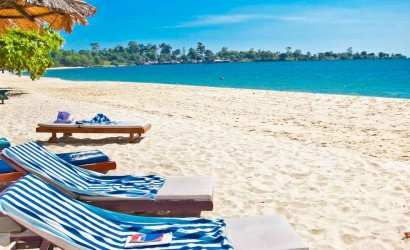
A Sihanoukville sandbox will be initiated on November 30th, which will allow quarantine-free travel not only to the port city, but also Koh Rong Island and Dara Sakor Resort in Koh Kong province.
This will now allow for quarantine-free travel to and within the Kingdom, but what exactly is in the fine print?
Sit back while we dive into the Sihanoukville Sandbox, outlining how it will work and what to expect.
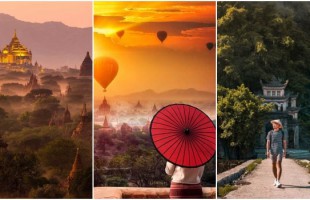 Asia Reopening – Which countries are open for tourism and travel now?
Since the beginning of the COVID-19 pandemic, Asian countries has taken the cautious approach to inbound travel and has had some of the strictest border restrictions and closures. At the moment, the nations of the region are in the beginning stages of reopening their borders for tourism, with every country introducing its own regulations.
The “unlocking” statuses vary widely. Travelers entering Asian countries may be required to do everything from going into quarantine, submitting negative COVID-19 test results, presenting proof of health insurance, and proof of vaccination (known a vaccine passports).
There is an understandable uncertainty with how you should travel to the Asian region if you are planning to. This is why we present you the list of 19 Asian countries, along with details on the current travel situation. As each country applies precisely defined regulations, you should always check the official websites listed in the article below for the latest government announcements.
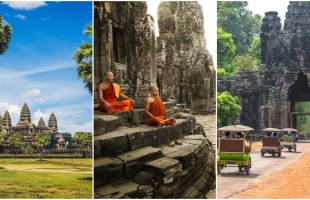 Reopening Cambodia Tourism - Everything you need to know
Not to be outdone by Vietnam’s recent announcement of fully reopening without testing on arrival, Cambodia has made a big announcement of its own less than 24 hours later: they have removed testing altogether including the requirement for a PCR test prior to departure and the ATK test upon arrival. Additionally, they have announced the reinstatement of Visa on Arrival for all travellers to Cambodia whether by air, sea or land.
For anyone who has ever dreamt of experiencing the wonders of Angkor without the crowds, there has never been a better time to go! For inspiration, go here to check out some of our amazing Cambodia tours. For further details regarding entry procedures, please read on.
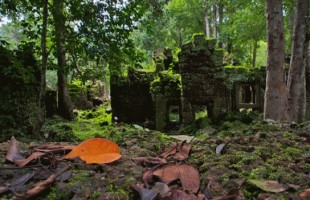 Phnom Kulen - Lost World Inside the National Park
A playground for locals, Phnom Kulen (literally Mountain of the Lychees) is a gorgeous day out. The main attraction is the waterfalls at the top of Kulen Mountain and it’s also a great picnic spot; well set up in Cambodian style with hammocks and shelters to keep you shaded from the sun. It’s around 1.5-2 hours drive from Siem Reap and if you go all the way to the top by van or car, you need to get there early, as the road is one-way traffic only.
The birthplace of the ancient Khmer empire, it is said that it was at Phnom Kulen that King Jayavarman II proclaimed Cambodia’s independence from Java.
Additionally, it is a very sacred site with multiple temples easily accessible. Two sites most noted are the Thousand Lingas at Kbal Spean, within the Kulen National Park site and Preah Ang Thom pagoda with its giant reclining Buddha. The area is a magnet to “kru khmer” (natural medicine doctors), and attracts people seeking blessings from its holy waters, particularly the potent life-giving waters at Kbal Spean, that are said to help couples conceive.
You may be interested in Khmer Empire & Jayavarman II
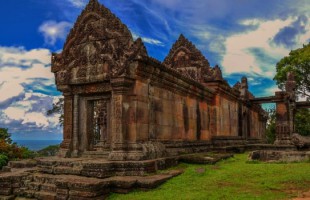 Preah Vihear - Ancient Temple in Northern Cambodia
Preah Vihear Temple (Prasat Preah Vihear) is an ancient Hindu temple built during the period of the Khmer Empire, that is situated atop a 525-metre (1,722 ft) cliff in the Dângrêk Mountains, in the Preah Vihear province, Cambodia. In 1962, following a lengthy dispute between Cambodia and Thailand over ownership, the International Court of Justice (ICJ) in The Hague ruled that the temple is in Cambodia.
Affording a view for many kilometers across a plain, Prasat Preah Vihear has the most spectacular setting of all the temples built during the six-century-long Khmer Empire. As a key edifice of the empire's spiritual life, it was supported and modified by successive kings and so bears elements of several architectural styles.
Preah Vihear is unusual among Khmer temples in being constructed along a long north–south axis, rather than having the conventional rectangular plan with orientation toward the east. The temple gives its name to Cambodia's Preah Vihear province, in which it is now located, as well as the Khao Phra Wihan National Park which borders it in Thailand's Sisaket province, though it is no longer accessible from Thailand.
On July 7, 2008, Preah Vihear was listed as a UNESCO World Heritage Site.
 Angkor - The Capital City of Khmer Empire
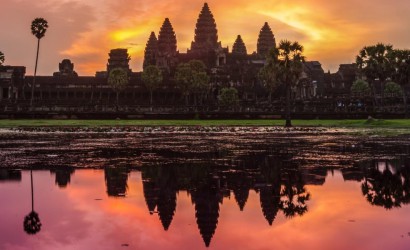
Deep in the forests of Cambodia’s Siem Reap province, the elegant spires of an ancient stone city soar skyward above the sprawling complex of Angkor Archaeological Park.
The Khmer Empire’s various capitals thrived here from the 9th to 15th centuries, while their rulers presided over an empire that stretched from Myanmar (Burma) to Vietnam. Including forested areas and newly discovered “suburbs” Angkor covers more than 400 square kilometers.
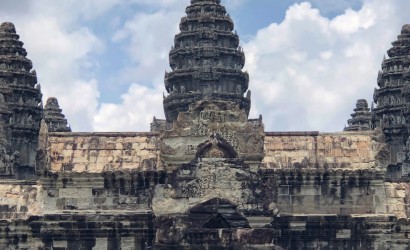
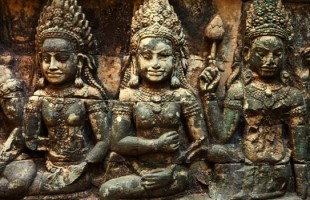
Though just one of hundreds of surviving temples and structures, the massive Angkor Wat is the most famed of all Cambodia’s temples - it appears on the nation’s flag - and it is revered for good reason. The 12th century “temple-mountain” was built as a spiritual home for the Hindu god Vishnu. The temple is an architectural triumph laden with artistic treasures like the bas-relief galleries that line many walls and tell enduring tales of Cambodian history and legend.
In other parts of Angkor such art depicts scenes of daily life - offering scholars a precious window into the past.
Reading the below epic guide for Angkor Archaeological Park, you will have all the information you need from its history, maps, best time to visit and so on to have the best out of your Angkor tours
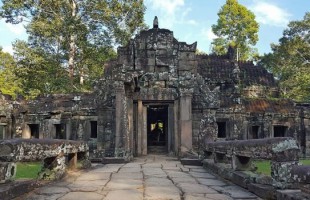 Banteay Kdei Temple - Citadel of Monks' cells
Banteay Kdei Temple (Prasat Banteay Kdei), meaning "A Citadel of Chambers", also known as "Citadel of Monks' cells", is a Buddhist temple in Angkor, Cambodia. It is located southeast of Ta Prohm and east of Angkor Thom.
Built in the mid-12th to early 13th centuries AD during the reign of Jayavarman VII (who was posthumously given the title "Maha paramasangata pada"), it is in the Bayon architectural style, similar in plan to Ta Prohm and Preah Khan, but less complex and smaller. Its structures are contained within two successive enclosure walls and consist of two concentric galleries from which emerge towers, preceded to the east by a cloister.
This Buddhist monastic complex is currently dilapidated due to faulty construction and poor quality of sandstone used in its buildings and is now undergoing renovation. Banteay Kdei had been occupied by monks at various intervals over the centuries till 1960s.
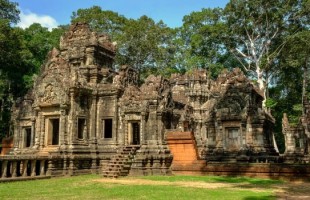 Epic Guide for Chau Say Tevoda Temple
Just east of Angkor Thom’s Victory Gate is Chau Say Tevoda. It was probably built during the second quarter of the 12th century, under the reign of Suryavarman II, and dedicated to Shiva and Vishnu. It has been renovated by the Chinese to bring it up to the condition of its twin temple, Thommanon.
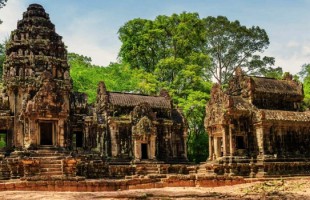
Thommanon Temple is a Hindu temple site that's covered in intricate carvings and surrounded by forests in Angkor. The temple is in relatively excellent condition, thanks to extensive restoration work in the 1960s.
It was constructed about the same time as Angkor Wat. The style of architecture is quite evident in the towers and carvings, which are in very good condition. During the rainy season, the dampened sandstone offers great photo opportunities.
Part of the UNESCO World Heritage Site, the complex dates back between the 11th and 12th centuries. It is about 600 metres east of the Victory Gate of Angkor Thom, just opposite Chau Say Tevoda. Even before restoration, Thommanon was in much a better condition than Chau Say Tevoda. Unlike the latter, which was built using wooden beams enclosed in stone, Thommanon Temple's entire structure was made out of stone.
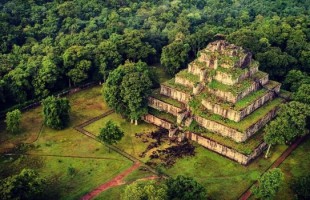 Koh Ker - Abandoned Temple of a Forgotten City
Koh Ker is a remote archaeological site in northern Cambodia about 120 kilometres (75 mi) away from Siem Reap and the ancient site of Angkor. It is a jungle filled region that is sparsely populated. More than 180 sanctuaries were found in a protected area of 81 square kilometres (31 sq mi). Only about two dozen monuments can be visited by tourists because most of the sanctuaries are hidden in the forest and the whole area is not fully demined.
Koh Ker is the modern name for an important city of the Khmer empire. In inscriptions the town is mentioned as Lingapura (city of lingams) or Chok Gargyar (translated as city of glance, or as iron tree forest).
Within this article, you will learn everything about Koh Ker before visiting this ancient temple ruin.
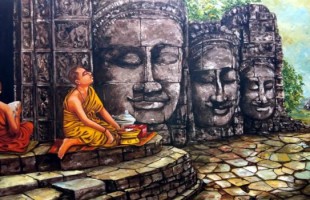 Angkor Wat’s Art: The Praise of Cambodia Stone Carvings
For many thousands of years, the art of stone carving has flourished in Cambodia. From the small statues made by local artisans to the famous, breathtaking carvings found at Angkor Wat, stone carving has become one of the country's most cherished art forms. Stone carving has been both a passion and a livelihood for many a Cambodian sculptor and has, in recent decades, survived war, genocide (in which many of the country's artists were murdered by the Khmer Rouge), and tyranny to be passed on to a whole new generation of artists.
The art of stone carving in Cambodia is one that has a very long, fascinating history which goes back to the foundation of the Khmer nation.
Within the scope of this article, we will learn more about the history of Cambodia stone carvings and the legends & myth of the stone carvings inside Angkor Wat
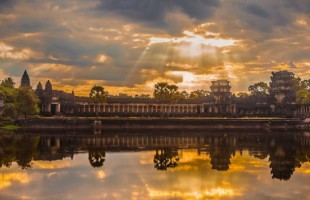 Best time to visit Angkor Wat - Cambodia’s City of Temples
Choosing the best time to visit Angkor Wat can be a little tricky. You almost have to choose between rain and muddy temple sites or good weather with hordes of people who always seem to be in the way of photographs. Following the typical weather patterns for much of Southeast Asia, the best time to visit Angkor Wat in Cambodia is during the dry season from late November to early April.
Fortunately, with a little timing, you can take advantage of the best times to visit Angkor Wat. Even better, travelers who hire drivers to visit ruins farther afield get rewarded with those Tomb-Raider-Indiana-Jones photos with no other tourists in the backdrop.
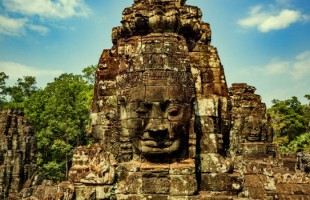 20 Interesting Facts about Angkor Wat
Angkor Wat, Cambodia's famous UNESCO World Heritage Site, is breathtaking and thrilling to explore. The temple ruins have a way of igniting the inner archaeologist in all of us. You won't soon forget wandering the sprawling, carved ruins of a once-great civilization!
The history of the City of Temples is riddled with incredible facts and events. For instance, Angkor Wat is the largest religious monument in the world, but it didn't make the new list of Seven Wonders of the World, and while it was previously rented for profit to an entity outside of Cambodia, the local government took back control in 2019.
 To discover Cambodia